Your agency's actual job isn't to drop the CPA.
Most agencies act like it is, though. The brief comes in with a metric attached and everyone just... optimizes toward it. And then they wonder why every paid search ad looks the same, every Meta creative looks the same, and the only way to win is to outbid somebody.
Optimization is a race to identical.
A CMO I respect talked about what big brands actually want from agencies, and the thing that stuck with me was this: they want a culture factory. Someone who understands the connection between the consumer or business culture they're selling into, and can bring that understanding TO the brand. Not the other way around.
That's a completely different job than "hit the number."
A financial brand doesn't just need cheaper cost per acquisition. They need someone who understands that the 18-year-old who gets their direct deposit a day early and earns points at the places they were already going to spend money anyway? That kid is a customer for decades. The brand knows how to build the financial engine. They don't know how that kid works.
THAT is the thing you bring: the ability to walk into a room and say, here is who your customer actually is, here is what they actually care about, and here is why your current brief is optimizing you away from them.
That's POV, that's ROU, and it's the only thing AI can't manufacture and a client can't figure out on their own.
If you are running campaigns without that, you are just another pair of hands pointing at a dashboard.
I am super excited to be part of 4As Expert Network!
Don't know what aaaa.org is? It's the American Association of Advertising Agencies. It's a trade organization, a great networking place & a place to learn - they have great courses, huge treasure troves of data & great events!
(And somehow I convinced them that I am expert enough that their members can learn from! I totally fooled 'em...)
I am super excited to be part of 4As Expert Network!
Don't know what aaaa.org is? It's the American Association of Advertising Agencies. @https://www.linkedin.com/company/4as/posts/?feedView=all
It's a trade organization, a great networking place & a place to learn - they have great courses, huge treasure troves of data & great events!
(And somehow I convinced them that I am expert enough that their members can learn from! I totally fooled 'em...)
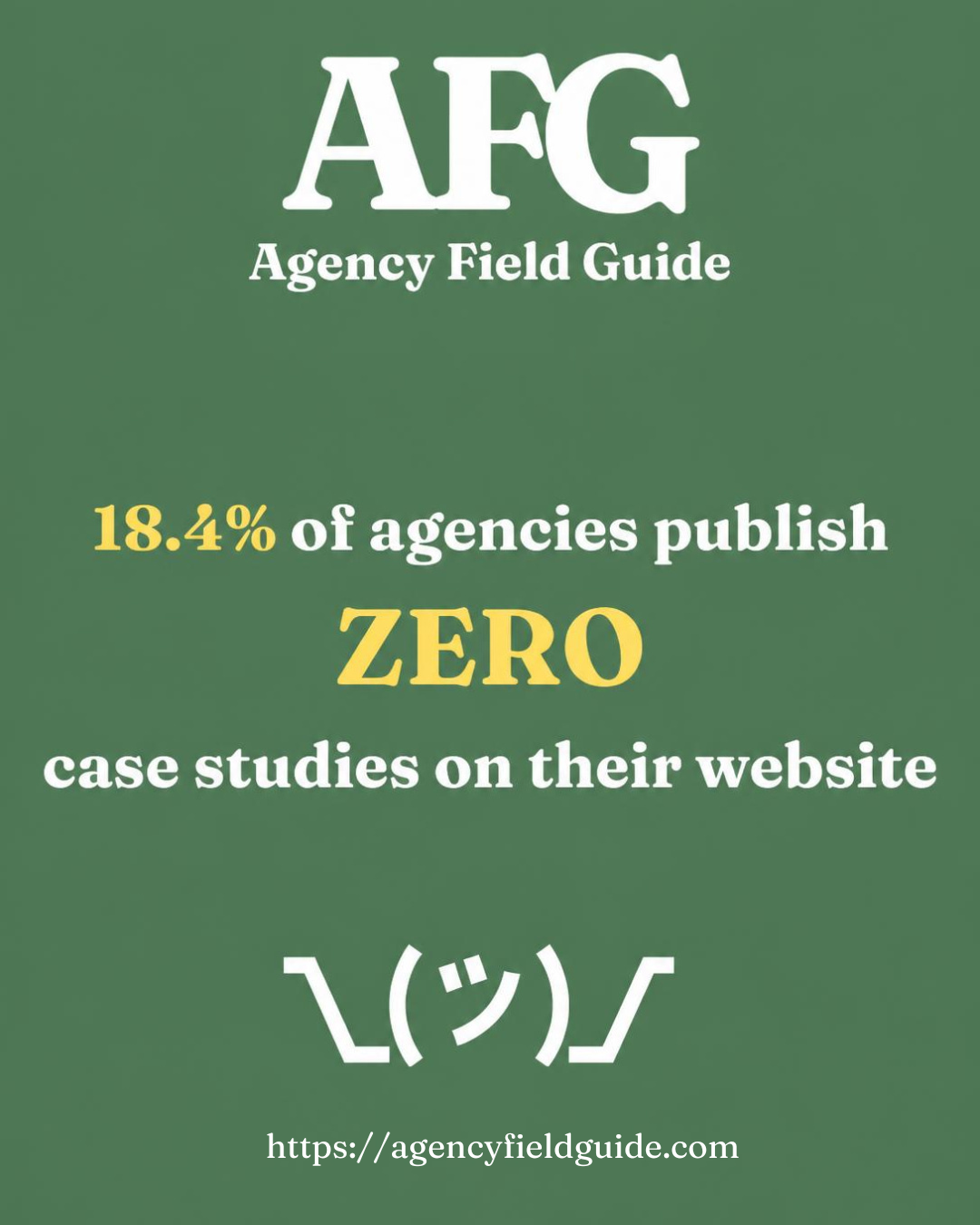
18.4% of agencies don't publish case studies on their website. (Via AgencyFieldGuide (.) com)
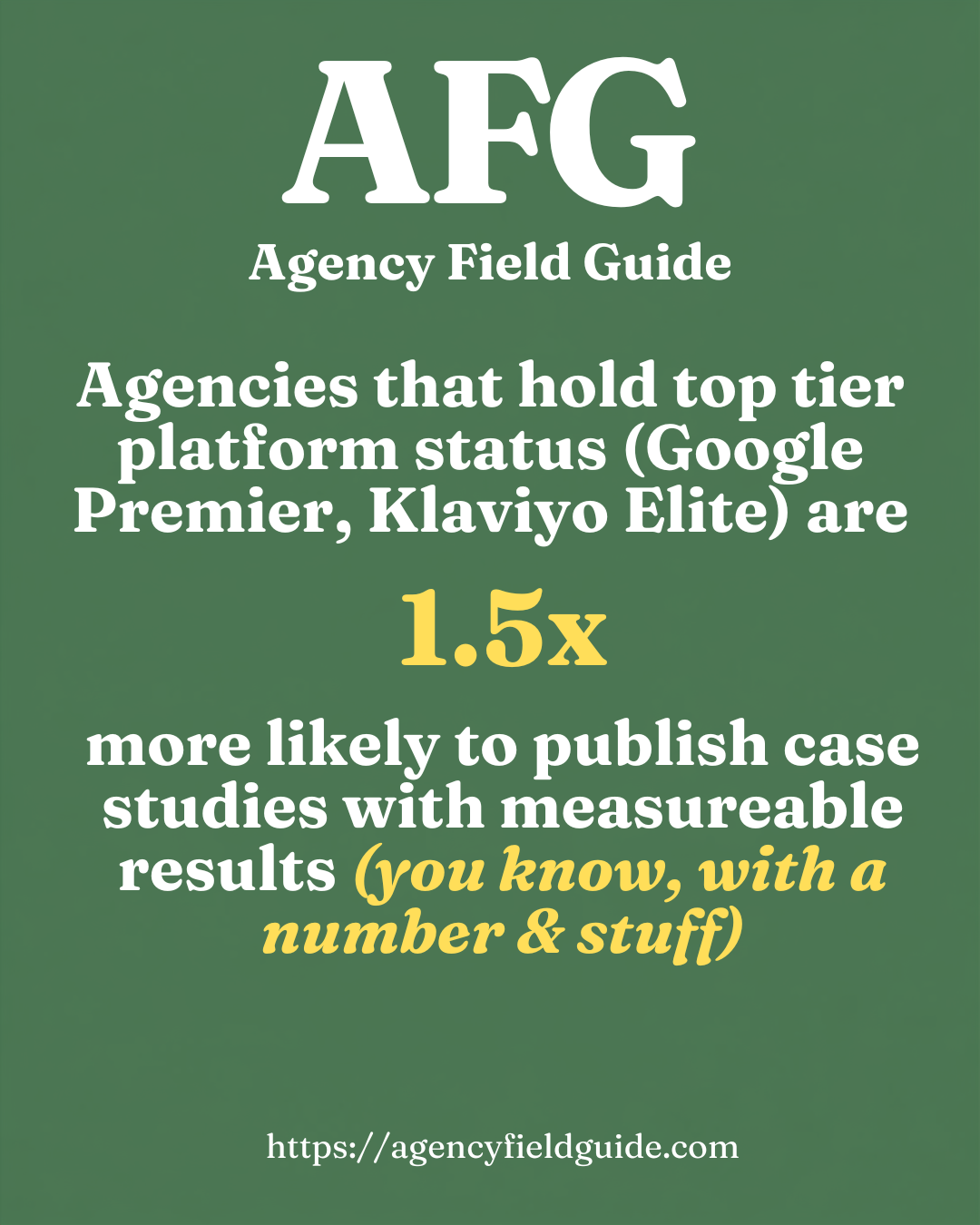
Agencies that do publish case studies with actual numbers and results in them are 1.5 times as likely as to be a top-tier partner on a platform partner list like Google Partners or Klaviyo Partners, etc.
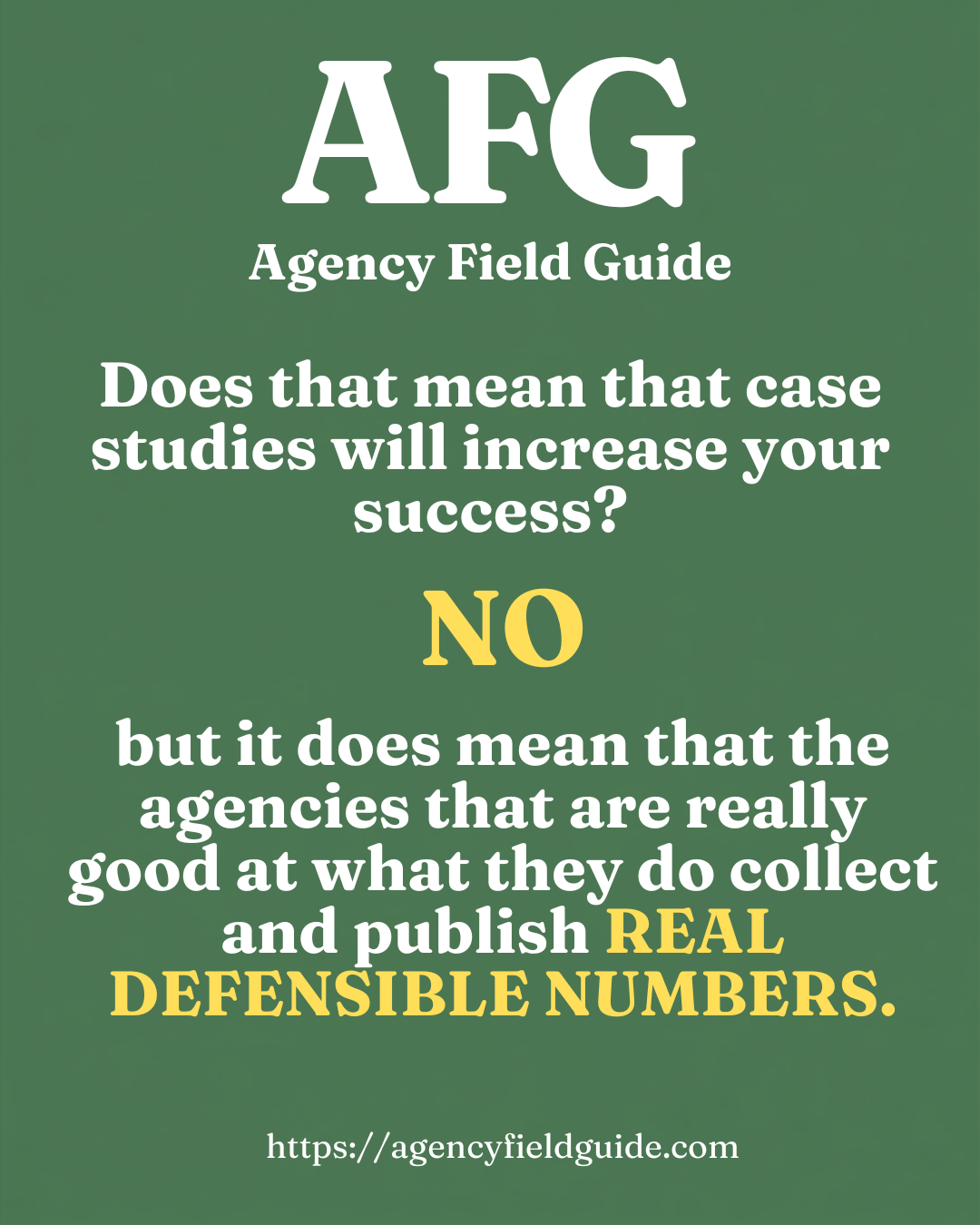
Does this mean that publishing case studies will make you a better agency?
Hell no.
Does it mean that agencies that measure their work and know what constitutes a win are way more likely to be good at what they do?
Yup.
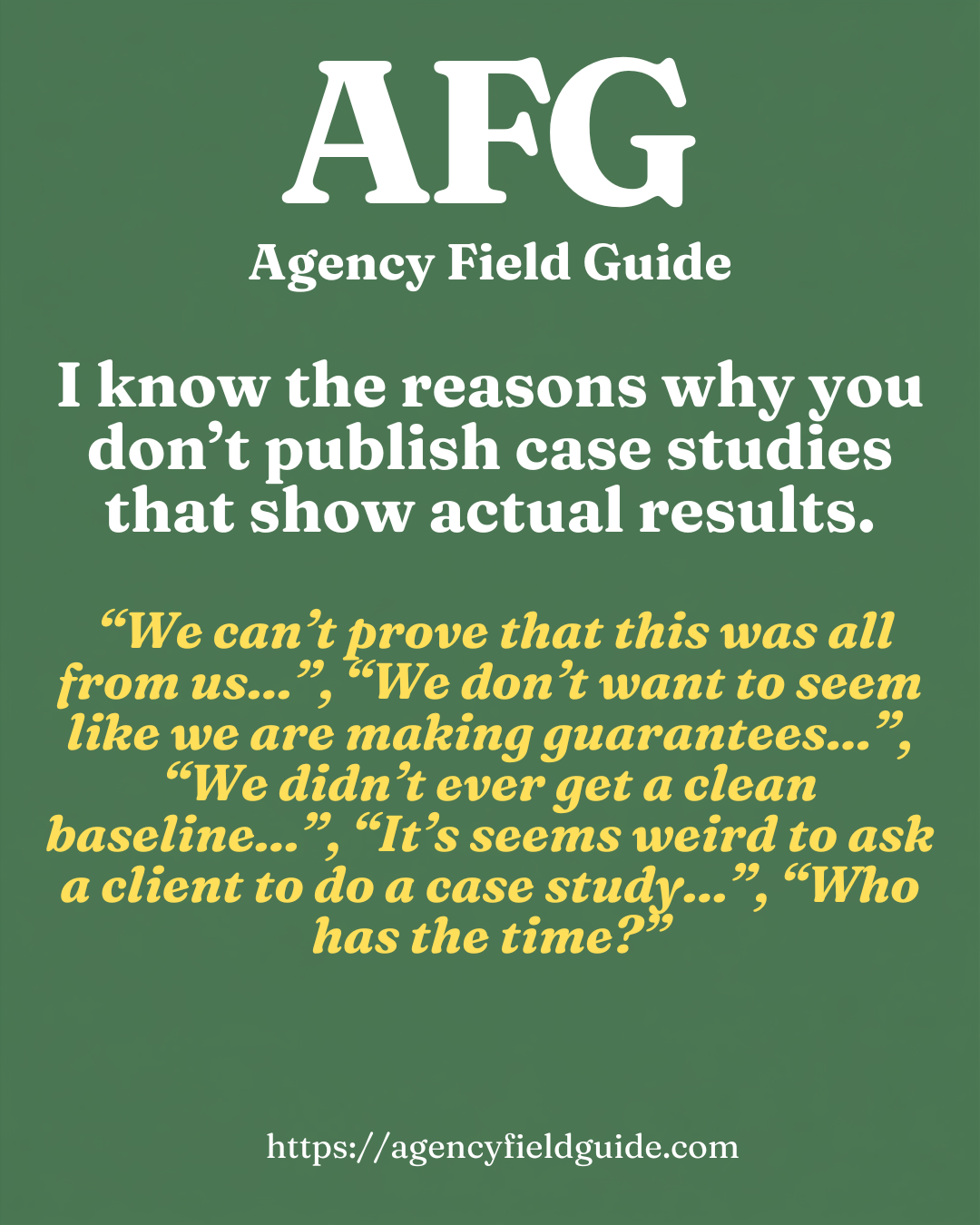
I know why you probably don't publish case studies with numbers in them. You are afraid of being braggy, or you are not sure that number is defensible, or the worst possible excuse: "I just don't have the time."
F that.
You run a marketing agency. Use the proof & power of what you do in order to market yourself.
The biggest unlock in business isn’t another system, strategy, or framework.
It’s understanding yourself.
What am I genuinely good at?
What am I confident doing?
What am I willing to tolerate?
And just as importantly what simply isn’t right for me?
You start recognizing "this is something my business would do" and maybe more importantly "this is something it wouldn’t."
The yield you get from alignment is what I call ROU - Return on Understanding.
Because the better you understand yourself, the easier it becomes to build a business that
actually fits who you are instead of constantly forcing yourself into someone else’s model.
I went deeper into this idea in my conversation with Jaime Ellithorpe of @https://www.linkedin.com/company/540-strategies/
Full podcast below hear the whole conversation.
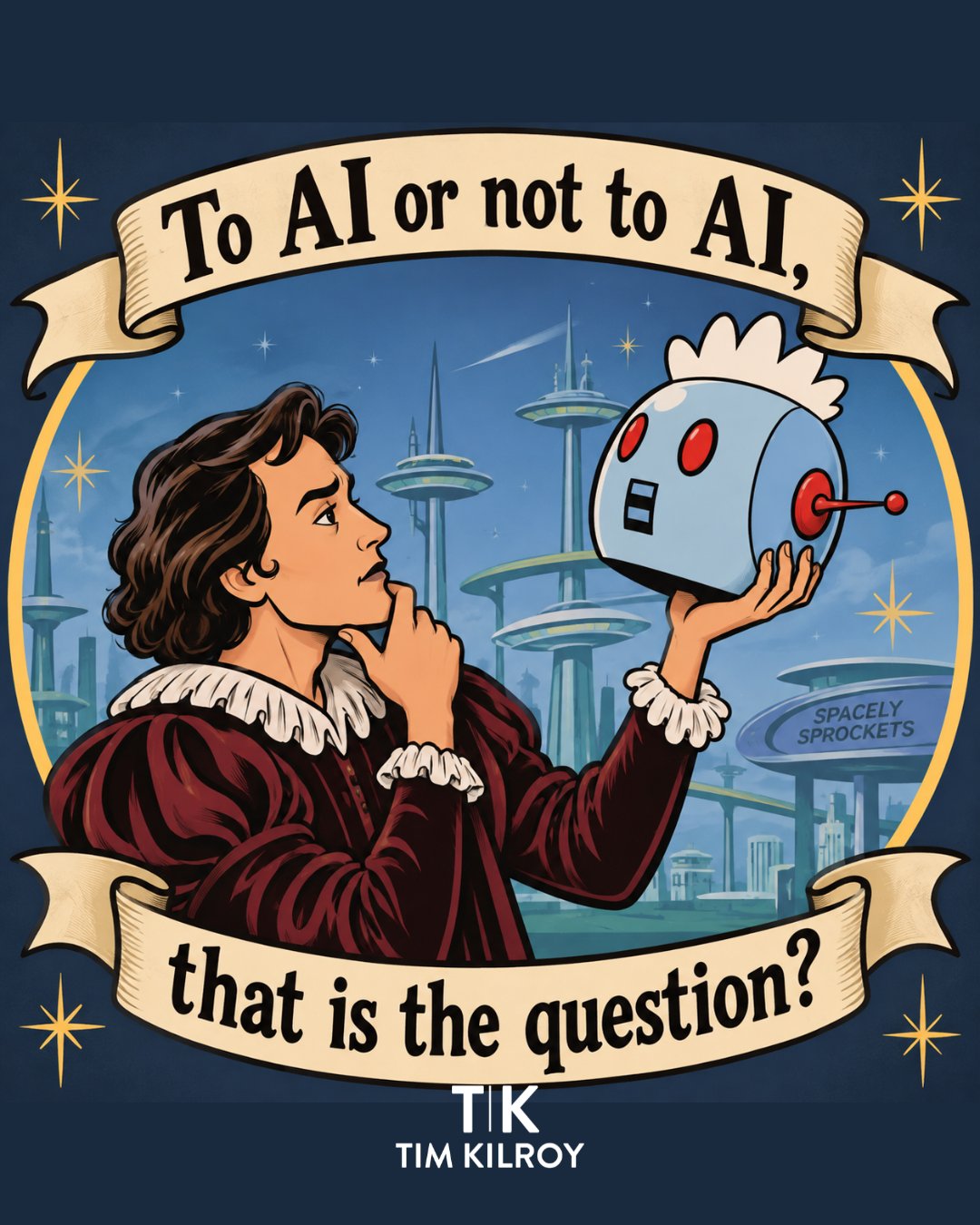
Here is the AI trap I see agencies fall into - they use AI to automate existing processes rather than build processes around what AI can do better.
Cold outreach is a great example - "personalizing" an email is a way to say "I did some research on you."
It doesn't really add any value to have AI say "Hey - I noticed that thing you did!" The prospect already KNOWS that stuff.
It doesn't really add value to take meaningless personalization and scale it to tens or hundreds of thousands of unwilling recipients.
What could you do with AI that's better than using some bullshit personalization?
Maybe:
1. You could use AI to take your list of potentials and cull any that don't have a certain number of real similarities to your best clients...so instead of sending more spam, you send better fit outreach.
2. You could use AI to pull out all market needs from your sales calls and find evidence of those market needs in a prospects...again, using AI to send fewer, not more, emails.
3. You could use AI to create a prospect specific landing page that shows the connection between that specific prospect and your service...
There are so many more interesting and high-impact things you can do with AI, rather than just use all of this power to scale shitty, undifferentiated crap
An agency I coach built a multi-7-figure ecommerce business for their client from scratch.
Last month the client CEO emailed - she was shutting it down.
Why? Her dashboard said traffic down & sales not growing. A failed experiment in her mind.
What her dashboard didn't say - margins up, conversion up, AOV up, $1.3M in annual profit and accelerating.
The agency knew all of it. It just wasn't in the weekly report.
Selling opportunity is easy. You show the future, the client imagines it, they run toward it.
Proving value is the work that shows your impact. Your client has forgotten every decision you've made and every adjustment you created. If you don't tell that story, your work is nothing by a number on a report.
Do the work
I hired a salesperson, talked at him for two hours, handed him a PowerPoint and unlimited minutes on his cell phone.
In 4 months, he didn't close a deal. I decided he sucked.
He didn't suck.
He said he did not have my stories or context in his head, and he was right.
I sucked at building a sales process he could succeed with...
A sales process is not an SOP with a CRM taped to it, it is your agency lore.
Learn to make sales an agency function that you can manage.
Stop delivering and your client screams today.
Stop paying taxes and the IRS screams eventually.
Stop marketing and absolutely nothing happens, which is the terrifying part.
My agency went quiet for ten weeks once, and my CAC went from $3,800 to $10K!
Only 21 percent of agencies have anyone marketing the agency, and only 14 percent report a healthy pipeline. That is not a coincidence.
You've got to create a visibility function in your agency.
Dig in via the bio.
When shit hits the fan, sometimes you, the intrepid agency leader, jumps into a client call saves the day! You feel like a hero.
You also just taught your client to escalate past your account manager forever.
You aren't a hero who saves your agency, you are more like the composer of the symphony that is your agency. And composers don't hum a melody and hope that the orchestra remembers it. The create a score & an arrangement, and then let the players play.
In this case, the players are your team...learn to be the composer, not the 1st violinist.
Read the whole thing.
They say revenue is vanity and profit is sanity.
The way to get sane is one flipped equation.
Instead of running your biz from this formula:
(Revenue-expenses) = Profit
Run your agency from this better formula:
(Sales - Profit) = Expenses you can afford.
Your job as the agency CEO isn't making money, it's allocating it.
Admin Hell
Sucking really hard at admin & delegation killed my first agency, not the market.
The Eisenhower Matrix is a great management tool to help you prioritize what matters.
The Kilroy Matrix tells you if you (as the CEO) should even touch it.
RACI turns the whole mess into a function somebody else can run.
You are the architect, not the builder.
Link in bio.